

Tax-ED Knowledge Kit
Launching in Singapore: A Strategic ASEAN Hub for Foreign Businesses
Whether you are launching a new business or establishing a regional hub to drive strategic expansion into the ASEAN market, Singapore is an exceptionally attractive destination for foreign investment due to its strategic location, low taxes, and straightforward entry‑level compliance requirements.
Key Reasons to Strategise Your Business in Singapore as a Business Hub
Business Structures in Singapore For Foreign Entities
Locals & Foreigners
Hybrid between company and partnership
Locals & Foreigners
Foreign companies
Temporary setup for market research and cannot engage in commercial activities that generate income.
Foreign companies
Incorporate a private limited company; foreign parent as shareholder.
Business Structures in Singapore For Local Residents
Locals only
Limited liability protection
Locals only
Now that we have established the criteria and rationale for the strategy, the following steps outline how to register a company in Singapore.
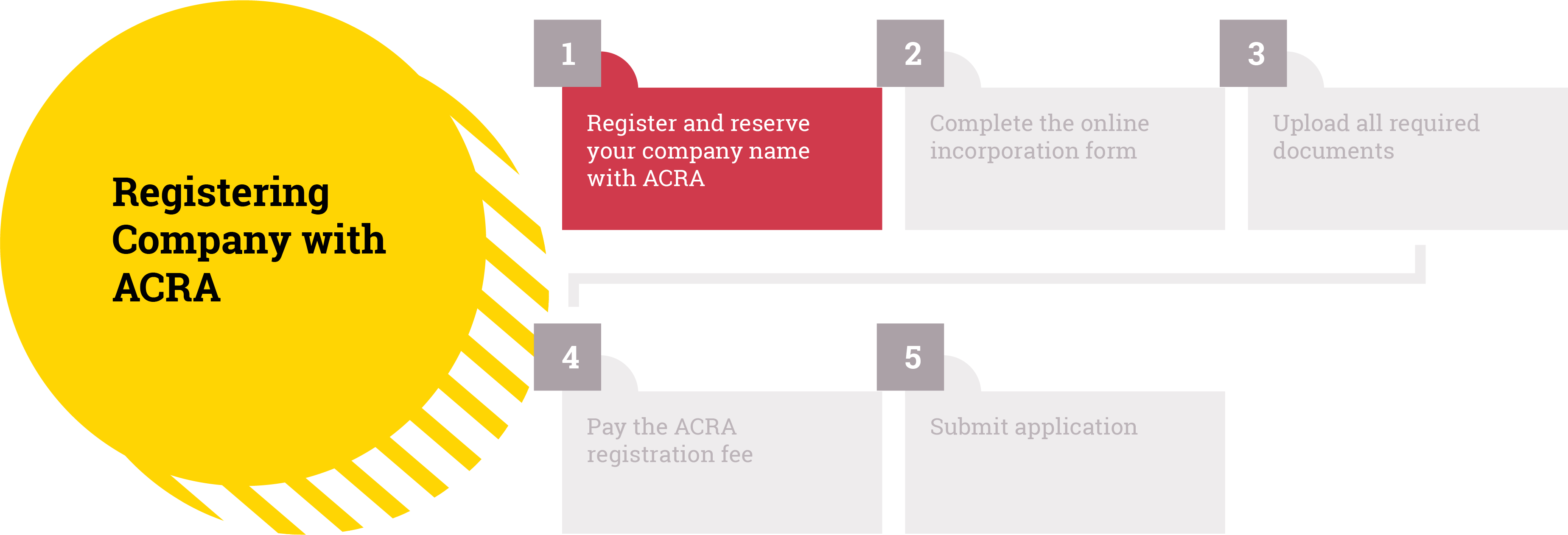
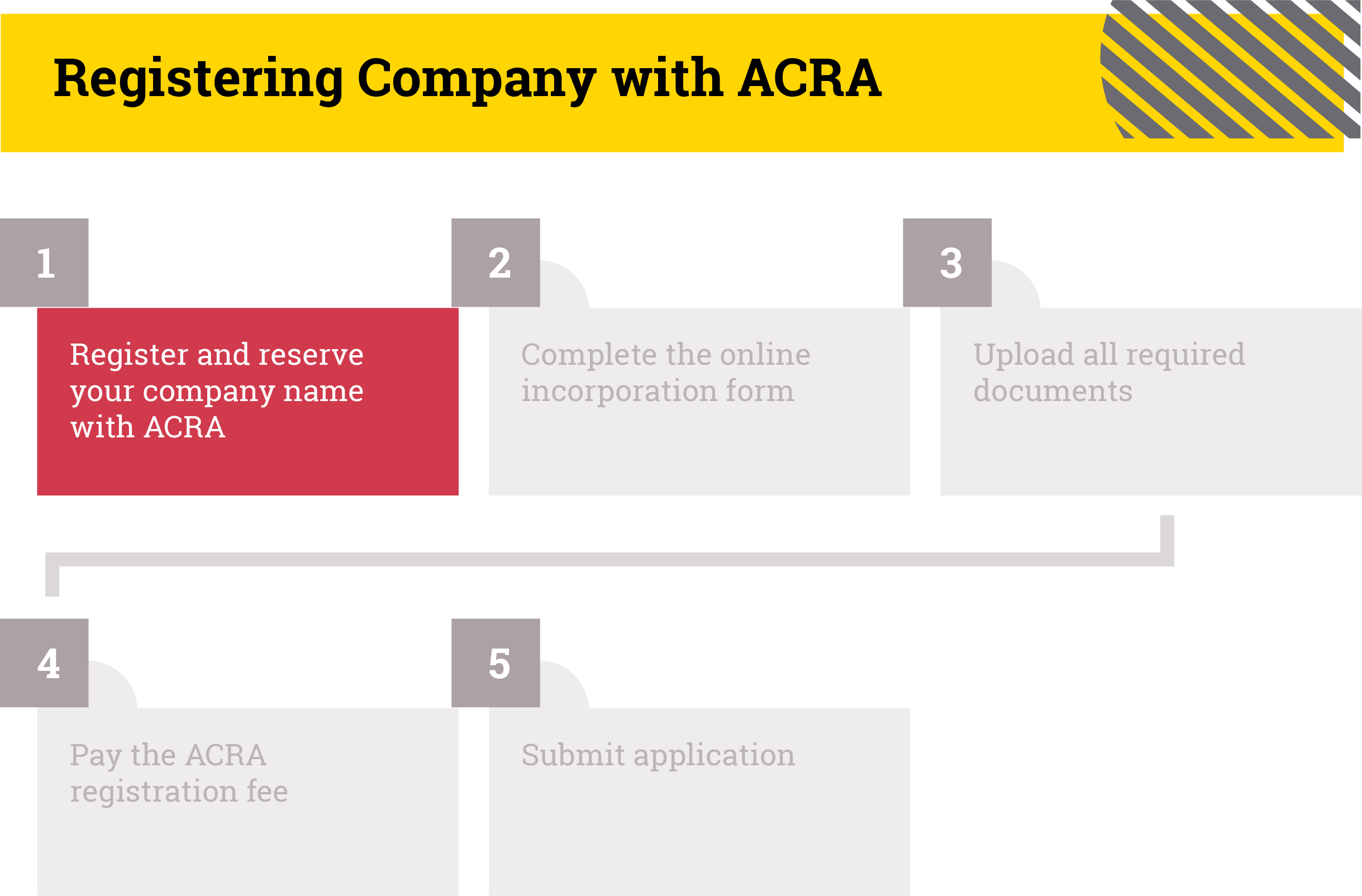
Step 1: Reserve Your Business Name with ACRA
To begin, every business must register with ACRA. Before preparing the required documents, we recommend reserving and registering the business name online at the ACRA Biz Portal.
Choose a name that is memorable and relevant to your business, and avoid any offensive or misleading terms.
*
Ensure that the corresponding .com.sg domain is available for your company name.
Step 2: Selecting Private Limited (Pte Ltd) as your Business Structure
Of the seven business structures available, we typically recommend that SME owners choose a Private Limited (Pte Ltd) company for its advantages.
Minimum 1 shareholder, 1 director who is a local resident/EP holder, a registered address, and a company secretary.
*
Register with ACRA within 6 months
*
Register for taxes (IRAS), GST if required.
Pte Ltd offers limited liability protection for shareholders.
*
It is the preferred structure for investors.
*
It offers easier hiring of foreign nationals and favored for the availability of tax advantages and incentives.
Step 3: Appoint Mandatory Key Officers
As a foreign business owner, you must comply with several mandatory requirements, most notably appointing a local resident as a company representative.
A Singapore citizen or permanent resident (PR) has to be appointed as director.
A nominee director can be hired
*
Appointed within 6 months of incorporation
*
Responsible for ensuring company compliance
*
Minimum of 1 shareholder to a maximum of 50 shareholders for Pte Ltd
*
May be wholly foreign individuals or corporate entities.
Step 4: Submit Required Documents
As a foreign business owner, you must comply with several mandatory requirements, most notably appointing a local resident as a company representative.
Copy of passport/NRIC
*
Proof of residential address with utility bills, bank statement, etc.
*
Personal particulars form
Certificate of incorporation
*
Register of directors and shareholders
*
Authorisation letter
Company Information to Submit
Registered office address in Singapore
*
Company constitution
*
Description of business activities
*
Share capital structure
Required to pay import duties and SST before applying for a tax exemption rebate.
Required to apply for import tax rebates, such as CJ5 and duty drawbacks.
Must undergo customs supervision for imports.
Regular companies face tax pressures for cost control
Exempted from import duties upfront and do not need to make any prior payments.
Do not have to apply.
Only required to report their import and export data
Significantly reduce tax burden.
Step 5: Complete Your Registration with ACRA
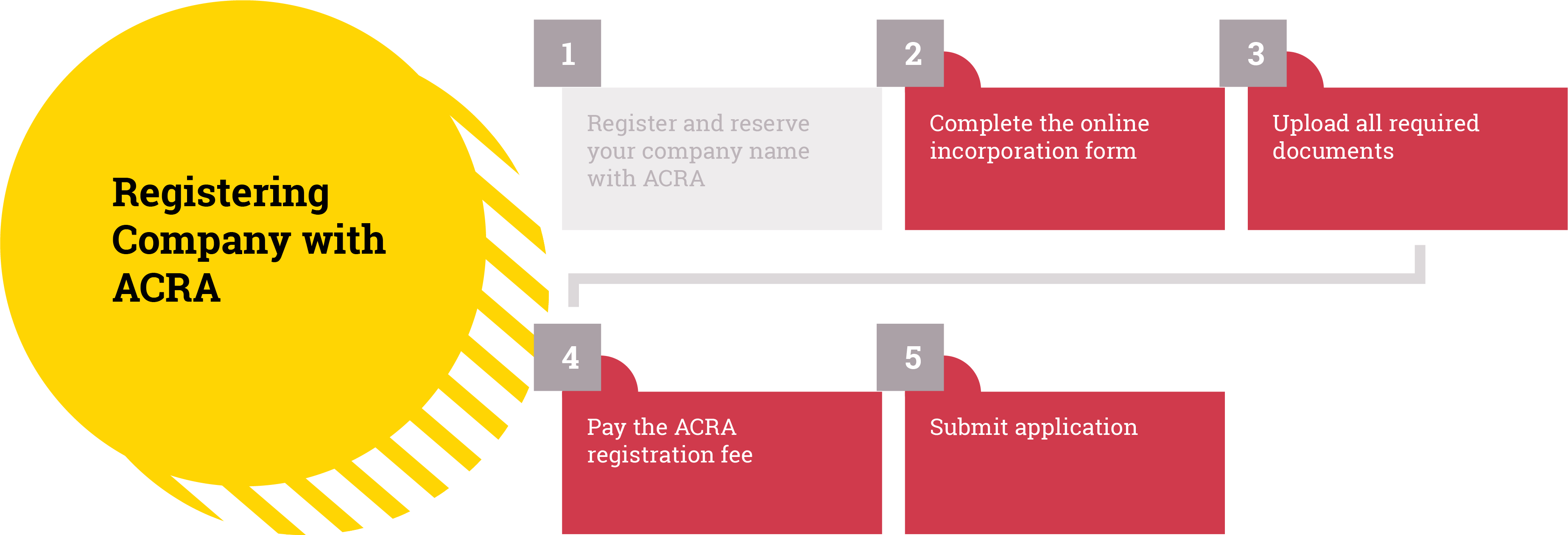
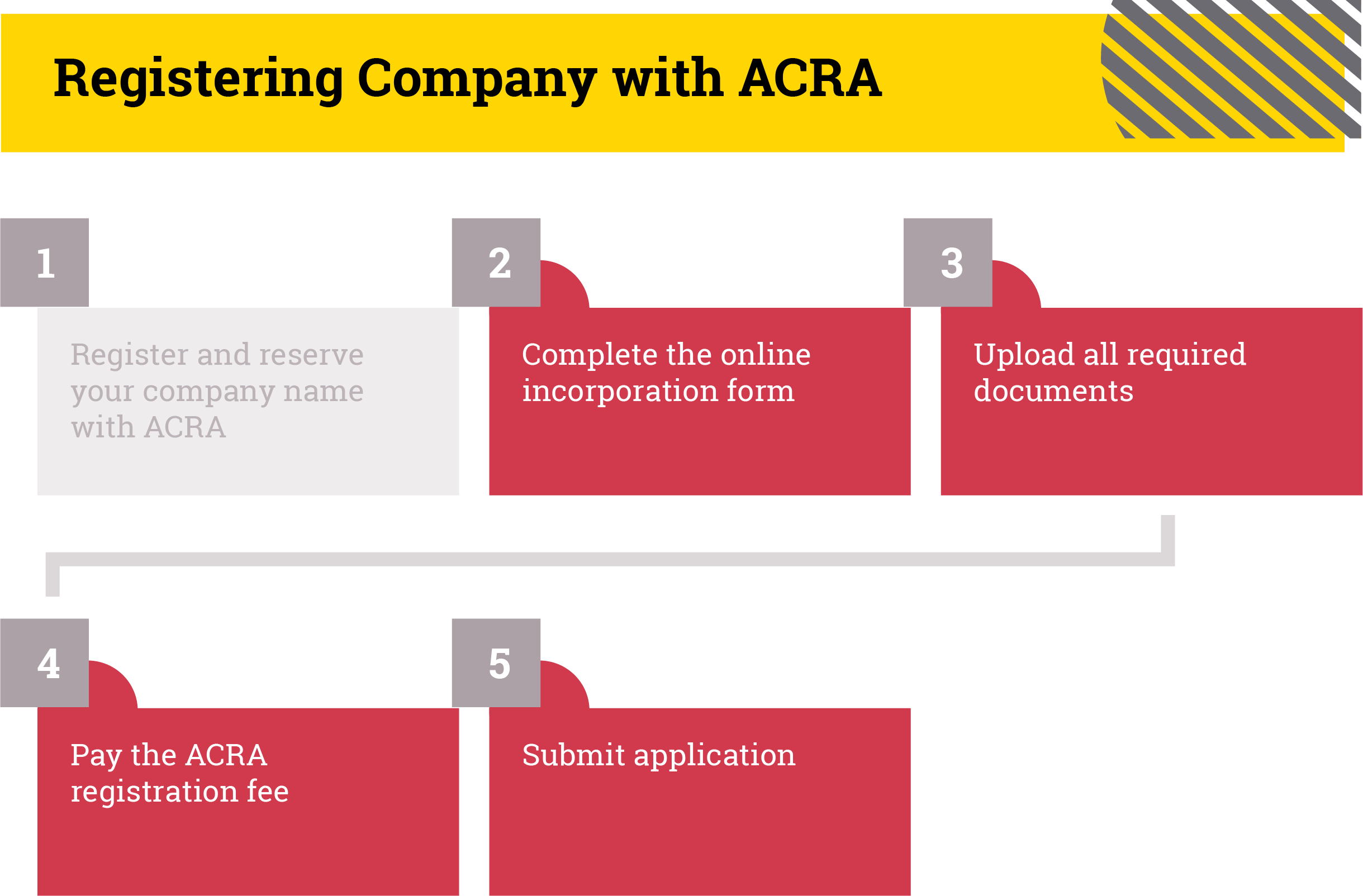
Now that you have the documents prepared, you can now complete the ACRA registration through BizFile+ at www.bizfile.gov.sg.
Step 6: Open a Corporate Bank Account
To conduct business transactions, businesses must open a Singapore corporate bank account using the required documents. Singapore offers several digital banks and licensed fintech business accounts that can be faster than traditional banks. Foreigners without a resident director typically register through a local nominee director or corporate services provider.
Certificate of incorporation
*
Business profile from ACRA
*
Company constitution
*
Identifications of directors and shareholders
*
Proof of business address
3 - 5 working days
5 - 10 working days
Required to pay import duties and SST before applying for a tax exemption rebate.
Required to apply for import tax rebates, such as CJ5 and duty drawbacks.
Must undergo customs supervision for imports.
Regular companies face tax pressures for cost control
Exempted from import duties upfront and do not need to make any prior payments.
Do not have to apply.
Only required to report their import and export data
Significantly reduce tax burden.
Step 7: Apply for Relevant Business Licenses and Permits
In addition to ACRA registration, you may need industry‑specific licences and permits. Use the GoBusinessLicensing portal to identify the licences applicable to your business.
Food shop license, liquor license
Clinic license from MOH
License from CPE or ECDA
MAS approval
Customs permits
Step 8: Register for GST and Set Up Accounting Systems
In addition to ACRA registration, you may need industry‑specific licences and permits. Use the LicenseOne portal to identify the licences applicable to your business.
GST registration is mandatory if annual taxable turnover exceeds SGD 1 million.
*
Voluntary GST registration is recommended to enhance credibility and avoid future administrative hassle.
All companies must maintain proper accounting records and must be kept for at least 5 years
*
Accounting and bookkeeping should begin immediately after business registration.
File Estimated Chargeable Income (ECI) within three months of the financial year end.
*
Form C or C‑S must be filed by 30 November each year.
*
New companies may qualify for tax exemptions
Step 9: Post-Incorporation Compliance Requirements
As a foreign business owner, you must meet several mandatory requirements; the most important is appointing a local resident as your company representative.
Annual Compliance
A Singapore citizen or permanent resident (PR) has to be appointed as director.
A nominee director can be hired
*
Appointed within 6 months of incorporation
*
Responsible for ensuring company compliance
*
Minimum of 1 shareholder to a maximum of 50 shareholders for Pte Ltd
*
May be wholly foreign individuals or corporate entities.
*
Prepare audited/unaudited accounts annually
*
Small companies may be exempt from audit
*
Register of directors
*
Register of shareholders
*
Register of charges
Monthly Compliance
*
File GST returns monthly or quarterly, if registered.
*
Ensure CPF contributions are made for local employees.
Other Compliance to Note
Any changes to directors, shareholders, or the registered address must be notified to ACRA within 14 days.
Common Mistakes When Registering a Business
As a foreign business owner, you must meet several mandatory requirements; the most important is appointing a local resident as your company representative.
*
Missing passport copies or proof of address.
*
Not having a valid Singapore registered address.
Sole proprietors failing to recognise the risks of personal liability.
Attempting to register a sole proprietorship as a foreigner.
Failing to plan for future funding and growth needs.
*
Only budgeting for incorporation fee
*
May be wholly foreign individuals or corporate entities.
*
Forgetting to appoint company secretary within 6 months
*
Not updating ACRA when circumstances change
A Strategic Gateway for ASEAN Expansion
Singapore's pro‑business environment, strategic location, and favorable tax and legal framework make it an ideal ASEAN hub. With the right entity, banking, transfer‑pricing controls, and careful planning around local compliance, businesses can expand regionally with greater efficiency.